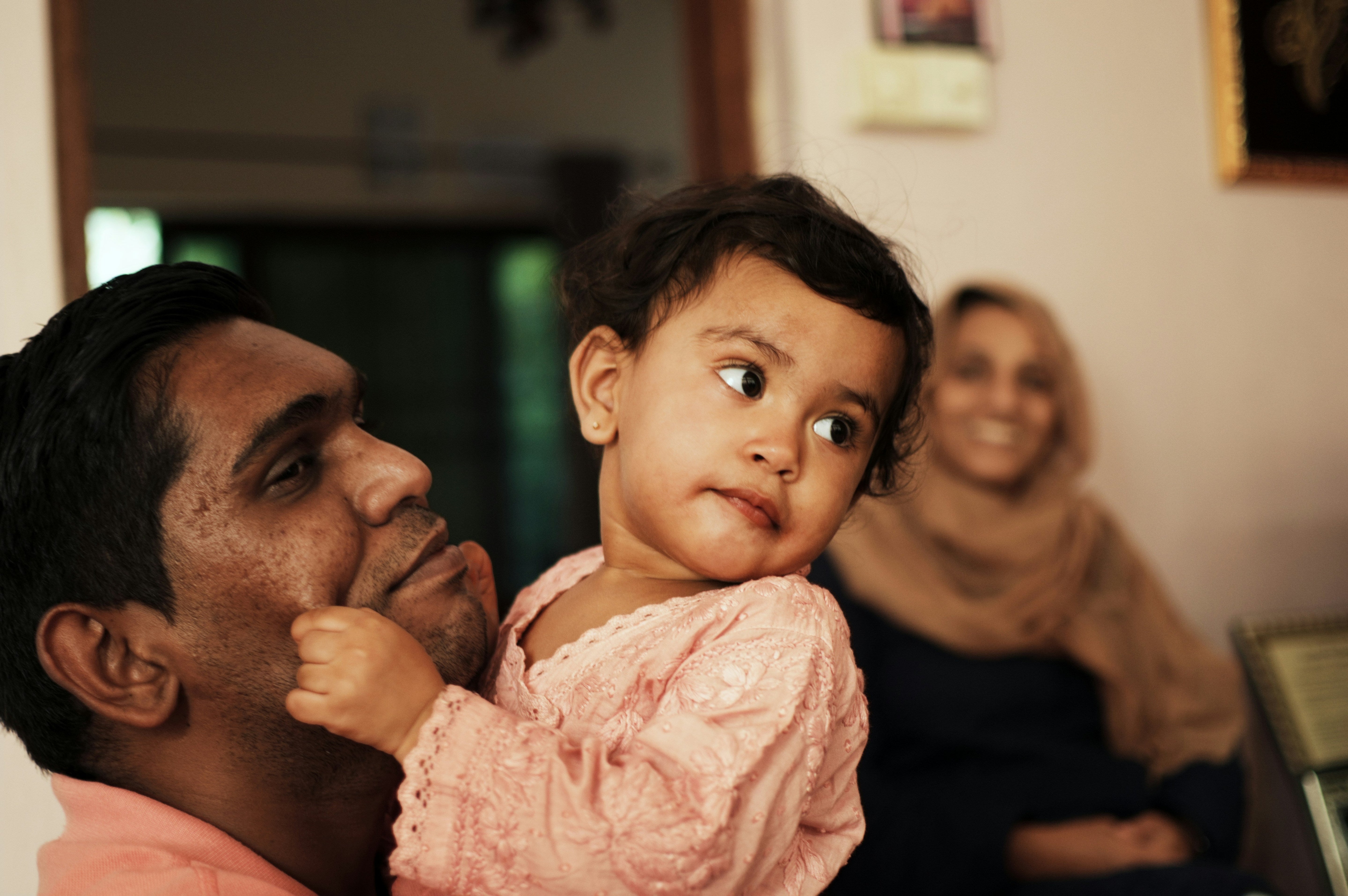
There's a kind of sadness that a lot of immigrant parents carry quietly, without ever quite saying out loud. It shows up in small moments. Your child answers you in English, even though you've spoken your language to them since the day they were born. They struggle to get through a phone call with their grandparents. They understand nearly everything you say and still won't say much back.
Maybe you'd pictured something different. Conversations moving easily across generations. Songs and jokes and family stories passed on in the language that shaped your own childhood, without needing to be explained or translated first.
Instead you find yourself repeating things. Translating on the fly. Wondering, somewhere underneath it, whether you've let your child down, or your own parents, or some version of the life you thought this would look like.
If that sounds familiar, you're in good company. Guilt shows up constantly in bilingual parenting, far more than the research on language acquisition ever quite prepares you for.
Why this never feels like just a language
People who haven't lived through migration sometimes ask why any of this matters so much. Does it really change anything if your child speaks your language or not.
For most parents, the honest answer has very little to do with vocabulary. A heritage language usually carries the people who taught it to you. Grandparents. Old family jokes that don't survive translation. The specific way your own mother comforted you as a child, in words that don't have quite the same weight in another language.
When a parent worries about losing the language, what they're often grieving is something bigger than words. It's the fear of losing an easy, unguarded connection between generations, the kind that doesn't need a translator standing in the middle of it.
The question parents ask themselves first
What should I have done differently? Should I have spoken it more? Been stricter? Insisted they answer back? Chosen a different school?
The research on this offers something closer to compassion than blame. A child's bilingual development is shaped by school, by friendships, by the language spoken across their wider community, by how much opportunity they get to actually use each language, by family relationships, by temperament, by things no parent has much say over at all. Parents shape plenty of this. They don't control most of it, and the difference between those two things matters more than it gets credit for.
Your child isn't rejecting you
One of the more painful conclusions parents jump to is that a child's language preference says something about how they feel. My child doesn't want my language. Doesn't care about where we're from.
That's rarely what's actually happening. Children gravitate toward whichever language lets them communicate with the least effort in a given moment, and the more time they spend surrounded by the community language, the faster and more automatic that language becomes to reach for. Answering in English instead of Korean, or French instead of Arabic, usually reflects which language currently sits closer to the surface, not how a child feels about their family.
A child can feel completely connected to you and still reach for the other language when they're tired, or distracted, or simply moving fast. Those two things sit next to each other far more often than parents expect.
What tends to matter more than fluency
Heritage language research keeps circling back to something that's easy to miss in the middle of worrying about vocabulary: long-term language maintenance depends less on hours logged and more on what the language is attached to emotionally.
Children who associate a language with warmth, with being understood, with people they genuinely enjoy being around, tend to hold onto it even when their fluency dips for a while. That connection often grows stronger the more the language shows up through different voices and different relationships, not only the parent's, so it starts to feel like something that belongs to the child rather than something only being asked of them at home.
That doesn't guarantee fluency. What it tends to protect is something quieter and, in the long run, more durable: the sense that the language is still theirs to come back to.
There's no version of this that looks effortless
Online, bilingual families often look like they're gliding through it. Kids switching languages mid-sentence without a hitch, everyone fluent, nothing ever getting lost.
Most real families don't look like that most of the time. Languages become lopsided. Kids mix them, refuse to answer in one, forget a word they knew last year, change their preference twice in the same month. Then sometimes, months or years later, something shifts again and the balance changes back. None of that is evidence of failure. It's closer to the normal shape of how this actually goes.
The story isn't finished
By age 7, it can feel like the door has already closed. It rarely has. Plenty of adults reconnect with a heritage language in adolescence, or later, when they want to understand a grandparent properly, or travel somewhere it's spoken, or simply understand a part of themselves they'd set aside for a while.
A more useful question than did I raise a bilingual child might be does my child feel like this language is theirs. Those aren't the same goal. Fluency moves around throughout a life. That sense of belonging tends to last a lot longer, and it's the part still being written, no matter what today looks like.
If you're in the guilt of this stage right now, it can help to understand why heritage languages fade in the first place, what's actually going on the moment a child starts school and stops answering in your language, and how to pass on a heritage language. And if the silence itself is what's hardest, why a bilingual child keeps answering in English is worth reading too.
Most parents raising a child in more than one language imagine the finished version. Fluent, comfortable, moving between both worlds without a second thought. Real bilingualism rarely arrives looking like that, and it rarely needs to. What tends to last isn't perfect fluency. It's a child who grows up knowing the language, and everything folded into it, was never going anywhere. It was always going to be there when they were ready for it.
This article is for general educational purposes and does not replace advice from a qualified professional. If you have concerns about your child's development, speak with a paediatrician or a speech and language therapist experienced in bilingual children.
Share: