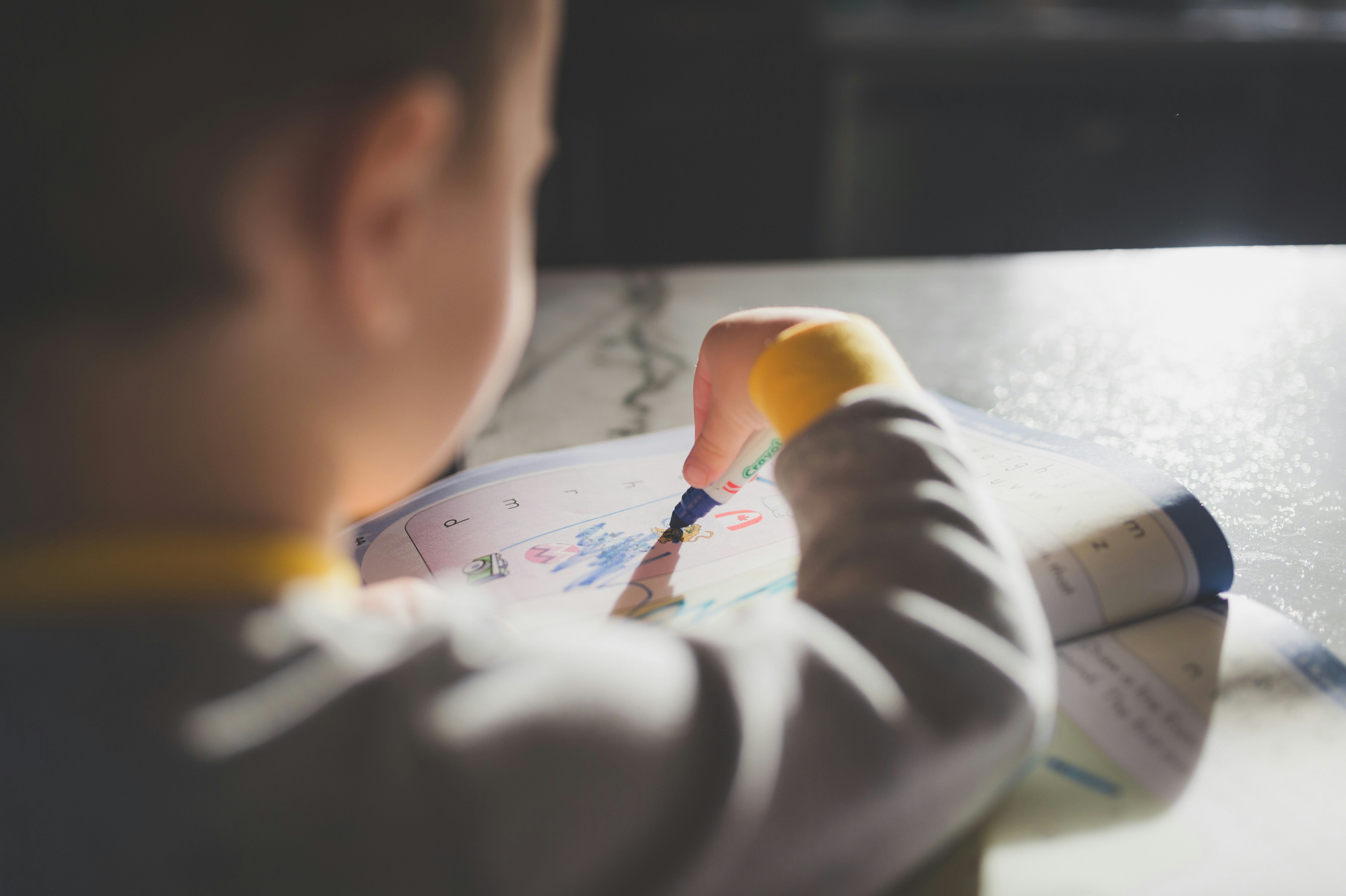
You talk to them in the language and they look at you. They follow your instructions. They laugh at the right moment. They clearly know what you are saying. But when they open their mouth, it is the other language that comes out.
It is a strange thing to witness. Close enough to success that it should feel reassuring. Far enough from what you hoped for that it does not.
Part of what makes this hard is that it is difficult to explain to other people. "They understand it" sounds like a half-measure, a consolation prize. Extended family may be sceptical. If your child never speaks the language around them, how would they even know? And nursery workers or paediatricians, who typically see monolingual development as the baseline, may not have much useful to offer.
So you are left holding this on your own, trying to decide whether it means something is wrong or something is just slow.
In most cases, it means neither.
What you are actually seeing
Comprehension and production are not two points on a single line. They are different cognitive tasks, and they develop at different rates in all children, not just bilingual ones.
Understanding a word requires your child to hear it, recognise it, and map it to a meaning. Speaking it requires all of that, plus retrieving it under pressure, constructing it within a sentence, and choosing to deploy it in the moment. That is a considerably larger ask.
In bilingual environments, there is an additional layer: children are also making pragmatic decisions. If one language is more present in their daily life, more widely understood by the people around them, or more reliably met with a response, they will naturally default to it. This is not stubbornness or refusal. It is efficiency. Children's language use is shaped by what works, and if one language is working better right now, they will use it.
Research in bilingual development consistently shows that receptive competence outpaces expressive competence, often by a significant margin, and that this gap can persist for months or even years without indicating any underlying difficulty. The silent period, when a child is clearly absorbing a language but not yet producing it, is well-documented and considered a normal phase of acquisition. It is, in a sense, the work before the work becomes visible.
The distinction that matters most
There is a difference between a child who understands but does not yet speak, and a child who has genuinely stopped acquiring the language. The first is common. The second is what actually needs attention.
Signs that comprehension is real and active: your child responds to the language appropriately, adjusts their behaviour based on what you say, laughs at jokes in that language, or follows multi-step instructions. These are not small things. They indicate that the language is alive inside them, even if it is not coming out yet.
The situations worth bringing to a speech and language therapist experienced in bilingual children are different: a child who is falling behind in both languages, or who does not seem to understand either reliably, or where there are broader developmental concerns alongside the language ones. Comprehension in one language and strong development overall is a very different picture from that.
What actually moves things forward
The instinct when a child is not speaking is to try to draw speech out. To ask more questions, to prompt them, to set up small tests of the language. This is understandable, but it tends to have the opposite effect. Children who feel pressure around a language often withdraw from it further.
What research points to, and what most families find in practice, is that production follows exposure, not pressure. The more a child hears the language used naturally, in contexts that matter to them, the more the words and phrases become familiar enough to say. Familiarity is what makes speech feel possible.
Exposure means keeping the language woven into daily life rather than reserving it for language learning moments. Meals, getting dressed, playing, going to the park. Hearing the same words in the same contexts, over and over, until they are as natural as breathing. Responding to what your child communicates, in whatever form it takes, rather than holding out for the right language.
Other voices matter too. A parent is one voice, one relationship, one emotional register. Hearing the same vocabulary and phrases from another source, someone who sounds different, who uses the language with a different kind of ease, adds another layer of familiarity. Children respond to that. It helps the language feel like something that belongs to the world, not just to bedtime or to one particular parent.
What happens next
At some point, something shifts. A word appears that you were not expecting. Then another. Sometimes it is quiet for a while again, and then there is more. The trajectory is rarely smooth, and the breakthroughs often seem to come out of nowhere.
They do not come from nowhere. They come from months of listening and processing that you could not see. When your child begins to speak the language, they are not starting from zero. They are showing you what has been accumulating all along.
You do not need to manufacture that moment. You need to maintain the conditions that make it possible.
Keep going.
This article is for general educational purposes and does not replace advice from a qualified professional. If you have concerns about your child's development, speak with a paediatrician or a speech and language therapist experienced in bilingual children.


Share: