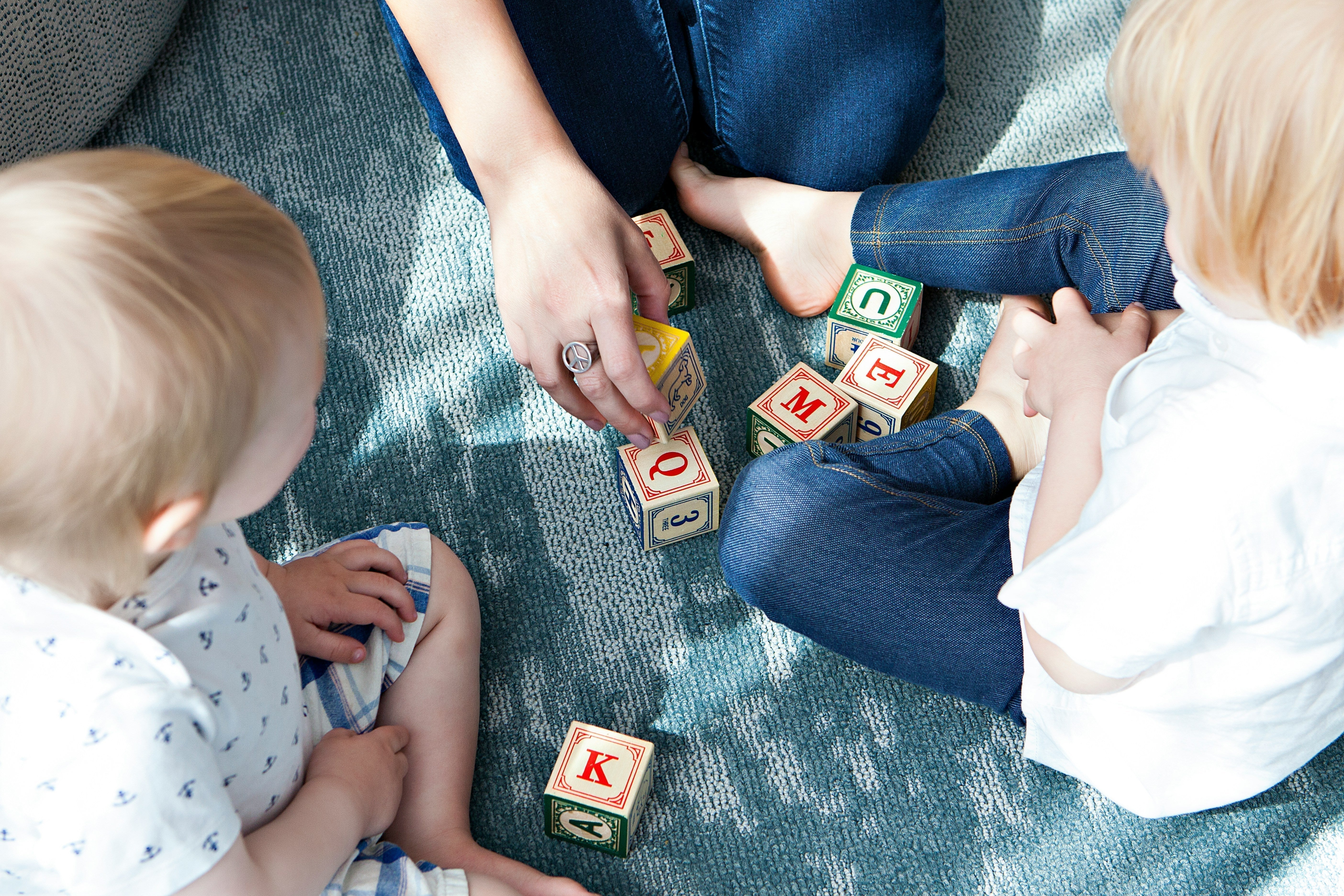
Most parents who are trying to raise bilingual children picture the same thing at some point: a structured system, a careful balance of languages, a daily routine that ensures the right amount of exposure to each one.
That picture is understandable. But it's also, for most families, completely unsustainable. And the good news is that it isn't what bilingual development actually requires.
A language-rich home isn't something you design. It's something you live in. And the difference between a home where a minority language thrives and one where it quietly fades usually has less to do with systems and schedules than with something much simpler: whether the language shows up in the small moments, every day.
What "language-rich" actually means
The term sounds like it requires effort and abundance — more books, more input, more structured time. But what research in bilingual language development actually points to is something more ordinary.
Children learn language through interaction. Not content playing passively in the background, not audio that runs whether a child is listening or not — but engagement where the child is an active participant. A parent narrating what they're making for breakfast. A caregiver asking a question and waiting for an answer, even from a child who can only point or babble. A bedtime story read so many times that a toddler can finish the sentences. Or a simple tool a child reaches for themselves, presses, listens to, and reaches for again — because they chose it, and it responded.
What makes a home language-rich isn't volume. It's the quality and consistency of those exchanges, and how naturally they're woven into the texture of daily life.
The role of repetition
One of the most counterintuitive things about how children learn language is how much they need to hear the same things over and over before those things become theirs.
Adults tend to find repetition boring. Children find it stabilising. The same song every bath time, the same phrase every morning, the same three books cycled through every week — these aren't signs of a limited environment. They're how vocabulary moves from something a child has heard to something a child owns.
This is why routines are so powerful for language development. Not because they're educational, but because they repeat. Every time your child hears the same word in the same context, the connection between sound and meaning gets a little stronger. Do that enough times across enough days and you have understanding. Keep going and you have language.
What this looks like on an ordinary day
A language-rich home doesn't require extra time. It requires using the time that's already there differently.
Breakfast is language. Narrate what you're doing, name what's on the table, ask a simple question and pause to let your child respond. The walk to the park is language. What you pass, what you notice, what your child points at — all of it is an opportunity. Bath time is language. Getting dressed is language. The ten minutes before sleep, when a child is still and receptive and you have their full attention, is some of the most valuable language time in the day.
None of this requires preparation. It requires presence and the habit of reaching for the language in moments you're already in.
The families where minority languages survive and grow are almost always the ones where the language has become attached to specific rituals — a particular song that only gets sung in Korean, a bedtime story that's always told in French, a game that happens in the minority language because it always has. Those anchors do quiet, consistent work over years.
Bringing other voices in
One of the most useful things you can do for a minority language is make sure your child encounters it through more than one voice and more than one context.
This matters because children who hear a language only from one person can sometimes become dependent on that person's specific voice and framing. Variety — different speakers, different tones, different situations — builds a more flexible and resilient understanding.
This is where books, songs, and well-designed language tools can genuinely earn their place in a language-rich home. Not as a replacement for interaction, but as a way of extending the language into moments when you're not available, adding voices and sounds your child wouldn't otherwise encounter, and giving familiar words a new context that reinforces what they already know.
The key word is familiar. A tool that introduces ten new words at once is less useful than one that repeats words your child has already heard, in a voice that sounds natural, in a way that feels like play rather than instruction. Repetition and real voices are what make language stick. The best language tools understand that.
What you don't need to worry about
You don't need perfect grammar. You don't need a native accent to be your child's primary language presence. You don't need equal time in each language, a colour-coded schedule, or a rule about which language gets spoken in which room.
What research consistently shows is that children don't need flawless input from every source. They need frequent, meaningful input from someone they're connected to. A parent who speaks imperfect Korean with warmth and consistency will do more for their child's language development than any structured programme delivered without relationship.
That said, exposure to native voices does matter — not as a replacement for your own presence in the language, but as a complement to it. Hearing natural rhythm, authentic pronunciation, and the full texture of a language as it's actually spoken helps children build an ear for it in ways that are genuinely harder to replicate otherwise. The goal isn't perfection from you. It's richness across everything your child hears.
When one language starts to pull ahead
In most bilingual homes, one language will naturally become stronger than the other at various points. The school language tends to accelerate quickly once formal education starts. The home language can start to feel fragile by comparison.
This is normal, and it isn't permanent. But it does mean the minority language needs deliberate presence, not just passive existence. Not pressure, not performance. Just regular, low-stakes contact. The goal is to keep the language alive and connected to things your child enjoys, so that it never fully recedes into something foreign or effortful.
A child who associates a language with warmth, familiarity, and play will return to it. A child who associates it with correction and obligation usually won't.
The bottom line
The most language-rich homes aren't the ones with the most books or the most structured input. They're the ones where language is simply present — woven into meals and bedtimes and car journeys and the small unremarkable moments that make up most of a childhood.
You already have those moments. The question is just whether the language is in them. And sometimes, the simplest things are what put it there — a familiar voice, a word your child has heard before, something small they can reach for on their own.

Share: