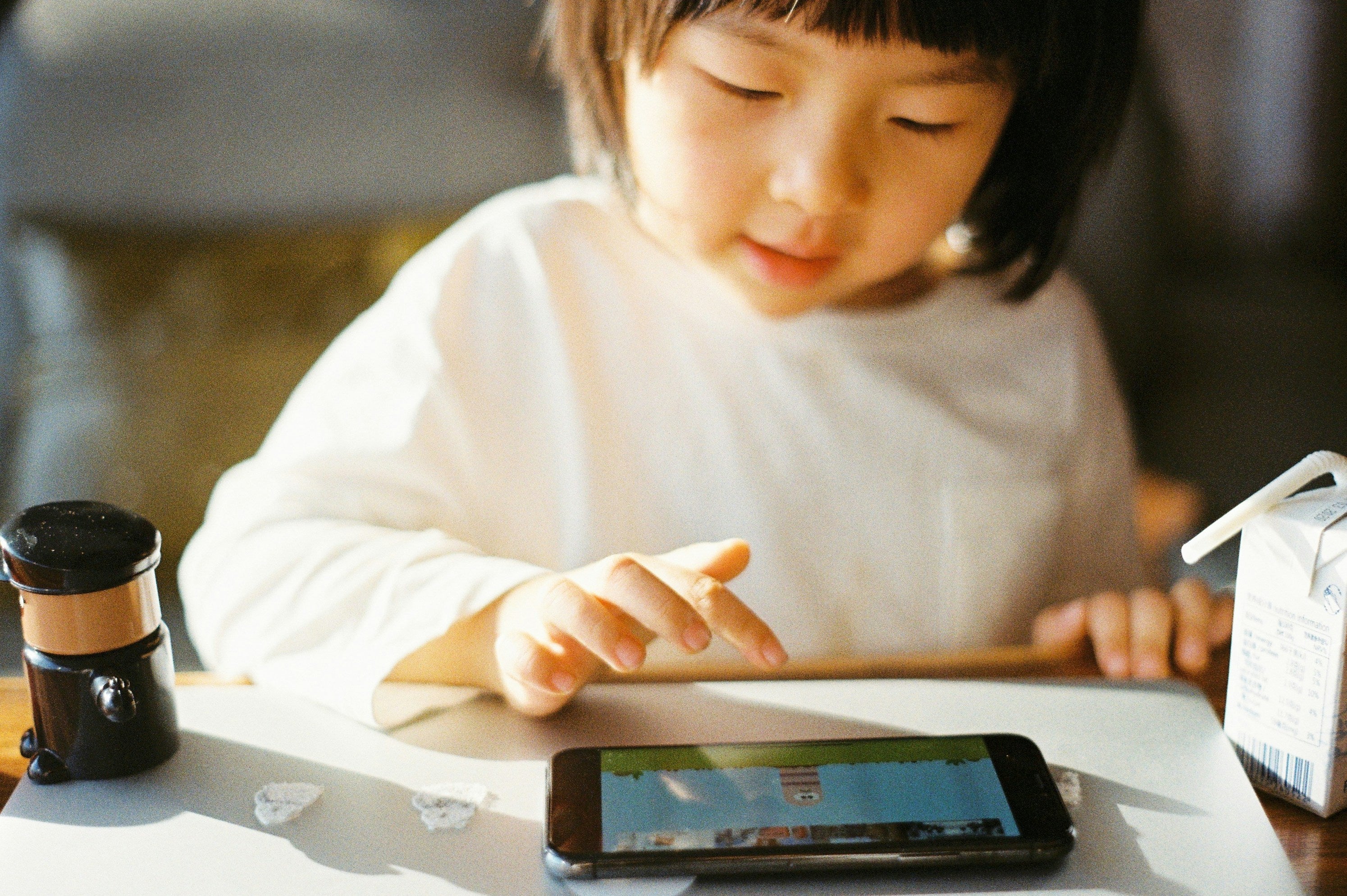
Yes, but probably not in the way you're hoping.
The idea is appealing: put on a show in the minority language, let your child absorb it, let the exposure do its quiet work. And it's not entirely wrong: screens can play a supporting role in language learning. But if you're relying on them as a primary source of minority language exposure, the research suggests you'll be disappointed by the results. Not because the content is bad, but because of something more fundamental about how young children actually acquire language.
Why screens feel like they should work
Television and video content provides a lot of what language learning appears to need. Native pronunciation. Vocabulary in context. Visual cues that help meaning land. Repetition across episodes. It looks like immersion, and immersion is supposed to work.
The problem is that what's happening on screen is only half of what language acquisition actually requires. Children aren't passive receivers of language input. They're active participants in a communication loop. And a screen, no matter how good the content, cannot complete that loop.
The video deficit
This gap has a name in developmental research: the video deficit. It refers to the well-documented finding that children under around three learn significantly less from screen-based content than from identical information delivered by a real person in real time.
The reason isn't the quality of the content. It's the absence of response.
When a caregiver speaks to a child, something dynamic happens. They adjust their pace, repeat what isn't landing, react to the child's expression, follow the child's gaze, respond when the child reaches or points or babbles back. That constant feedback loop is not incidental to language learning. It is the mechanism. Language at this age is built through interaction, not reception.
A screen delivers input in one direction only. It cannot notice that your child looked confused. It cannot slow down, repeat, or change tack. It cannot respond to an attempt to communicate. And without that responsiveness, the learning that happens is shallower and less transferable than it appears.
This is why children can watch the same show dozens of times, clearly recognise the characters, clearly understand what's happening, and still not produce a single word from it in active speech.
What screens can actually do
None of this means screens are useless. For older toddlers and children who already have some foundation in a language, video content can genuinely support vocabulary and listening comprehension. And at any age, certain kinds of screen content do useful work.
Songs and music in the minority language are probably the most effective screen-based tool available to bilingual parents. The combination of melody, repetition, and rhythm makes language stick in a way that dialogue alone doesn't, and children will often reproduce words from songs long before they reproduce words from conversation.
Familiar, repetitive content also has value. A show your child has watched many times, whose phrases they've begun to anticipate, whose characters they've formed a relationship with — that kind of deep familiarity can build a real feel for the sounds and patterns of a language, even if active production remains limited.
And screens become significantly more useful when a parent watches alongside the child. Pointing, naming, reacting, asking questions, connecting what's on screen to something real: that layer of interaction is what converts passive exposure into something closer to active learning.
The distinction that matters
The question worth asking about any language tool — screen-based or otherwise — is whether it requires anything from the child, or whether it runs regardless of what the child does.
A show plays whether your child is watching or not. Background audio plays whether your child is listening or not. Passive input of this kind sits at the shallow end of the learning spectrum.
What moves language development more effectively is input that demands engagement: where the child makes a choice, takes an action, hears a response. A child who reaches for something, presses something, selects something, and hears a real voice respond to that choice is in a fundamentally different relationship with the language than one sitting in front of a screen. The interaction doesn't have to be with a person. It has to be real.
How to use screens well
If you want screen time to support minority language learning rather than just fill time, a few things make a real difference.
Watch together when you can.
Your presence transforms passive viewing into a shared experience. And your reactions, questions, and commentary are what give the language traction in real life.
Connect what happens on screen to what happens off it.
If a show introduces a word, use it later that day. If a character does something, reference it during play. The bridge between screen content and lived experience is where language moves from recognition to use.
Favour repetition over novelty.
A child who has watched the same episode fifteen times has had fifteen opportunities to deepen their familiarity with its language. A child who has watched fifteen different episodes once each has had fifteen much shallower encounters. For language learning, depth beats variety.
Don't mistake recognition for production.
A child who clearly understands a show is not necessarily on their way to speaking the language. Understanding and speaking are different skills, and screens tend to develop the first much more than the second.
The bottom line
Screens can introduce a language, reinforce what a child already knows, and make the minority language feel present and familiar. That's genuinely useful, and it's worth having good content available.
But language grows through interaction, not just exposure. Screens can do the first part. They struggle with the second.
The families where minority languages thrive are almost always the ones where the language is alive in real exchanges: in conversations, in play, in the small back-and-forth moments of ordinary life. Screen time works best as a complement to that, not a substitute for it.
This article is for general educational purposes and does not replace advice from a qualified professional. If you have concerns about your child's development, speak with a paediatrician or a speech and language therapist experienced in bilingual children.


Share: