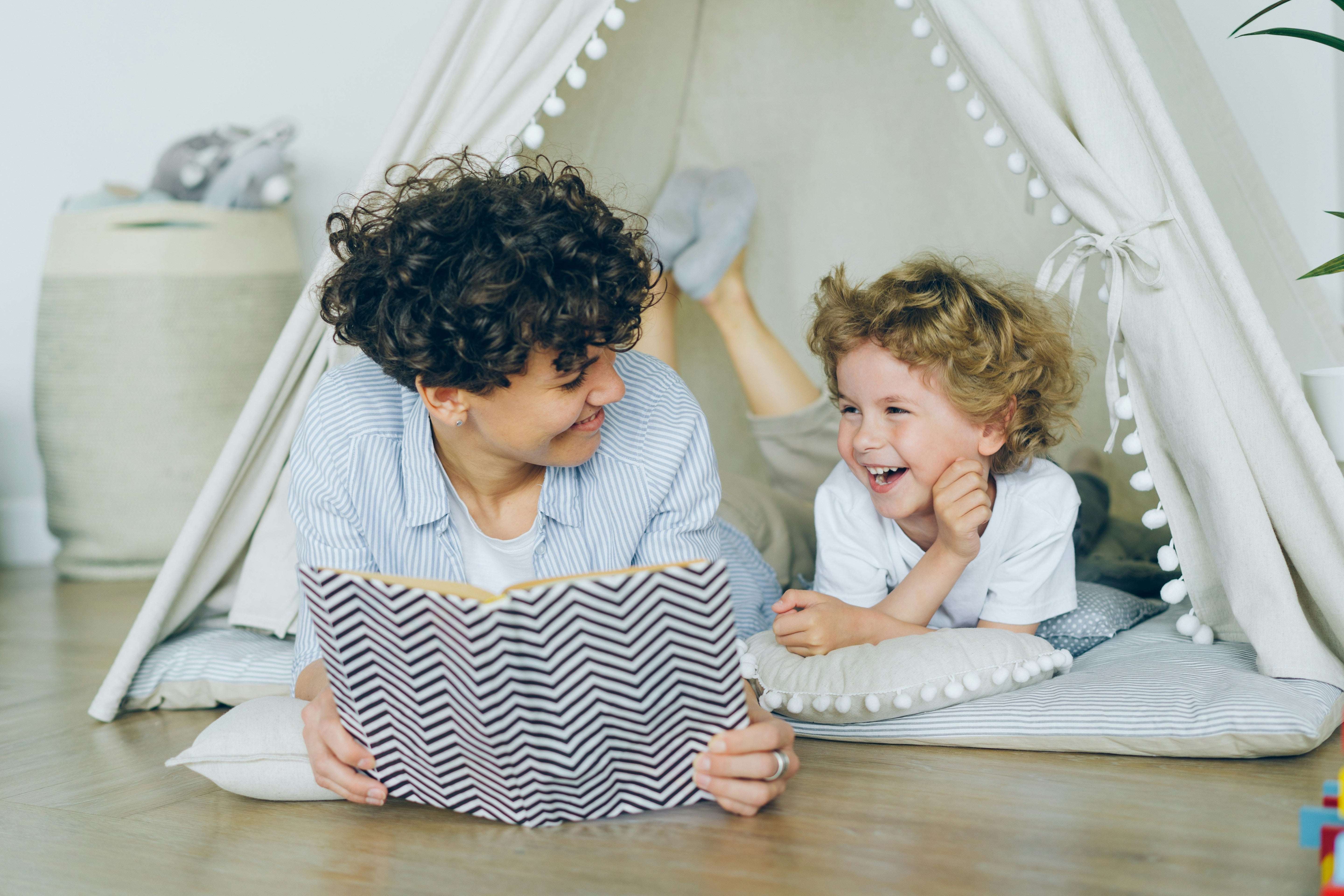
The honest answer is: there is no single magic number.
But research gives a useful benchmark. Most children need around 25 to 30 percent of their waking hours in a language to actively use it.
This is the question almost every bilingual parent eventually asks, usually at a moment of doubt. Is what we are doing enough? Are we too inconsistent? Did we miss a window?
You have not.
What the research actually suggests
Research in bilingual language acquisition suggests that children often need a language to make up around 25 to 30 percent of their waking hours to develop active use of it. For a typical toddler, that works out to roughly three to four hours across a full day.
That number is worth sitting with for a moment, because for many families it is more achievable than it sounds.
It does not mean three to four hours of lessons, structured time, or uninterrupted conversation. It means presence in the language across everyday life. Meals, bath time, play, stories, songs, getting dressed, running errands.
This is the ordinary fabric of a day with a small child.
This is what counts.
It also means that a child who hears a language only through occasional visits with grandparents, or on weekends with extended family, may need additional sources of exposure to develop active use. Those moments are genuinely valuable. The warmth and context that comes with family interaction is some of the richest language input a child can get. But consistency across the week is what builds familiarity over time.
Exposure is not the same as instruction
This is one of the most important distinctions in bilingual parenting.
Children do not learn language by being taught it. They learn it by living inside it.
Research consistently shows that interaction drives language acquisition far more effectively than passive listening. Language tied to real moments, real relationships, and real emotion is what sticks.
Tools and audio can support this, especially when they are used together with a parent or caregiver. What matters most is that the child is engaged, not just hearing the language in the background.
A parent who speaks during bath time, narrates what they are cooking, sings the same songs each night, or uses simple tools to prompt back-and-forth interaction is building language in a powerful way.
Repetition across familiar situations is how understanding grows.
And understanding always comes before speaking.
A child not speaking yet does not mean the exposure is not working.
It usually means it is.
What “enough” looks like in a real family
Every family looks different, but some patterns consistently support bilingual development:
-
Daily routines like meals, bath time, or bedtime in the second language
-
Other voices filling the gaps, such as grandparents, caregivers, songs, or tools that bring native speaker audio into everyday moments
-
Light, daily exposure maintained over time rather than intense but irregular bursts
Language is built slowly, in layers.
When exposure is genuinely limited
Sometimes life makes consistent exposure difficult. Work schedules shift. Support systems change. A new baby arrives.
Gaps are normal.
They are not catastrophic.
Children can reconnect with a language after a break. What matters most is returning to it.
It is worth paying closer attention if a child has limited exposure across all languages they hear and you have concerns about overall communication development. In those cases, a speech-language specialist with experience in bilingual children can help.
A note on quantity and quality
The 25 to 30 percent range is a useful guide, but it is not a strict threshold.
A child getting slightly less exposure with warm, responsive interaction may progress more than one getting more hours of passive input.
Quality matters.
But quantity matters too.
If exposure is currently low, the goal is not to overhaul your life. It is to gently expand the language into moments that already exist. One more routine. One more song. One more shared interaction.
The bottom line
Three to four hours a day is a useful benchmark to work towards.
Not perfect hours. Not instructional hours. Just time where the language is present, alive, and connected to something your child cares about.
If you are doing that consistently over time, you are doing enough.
If you are not there yet, the gap is likely smaller than it feels and more flexible than you think.
This article is for general educational purposes and does not replace advice from a qualified professional. If you have concerns about your child’s development, speak with a paediatrician or a speech and language therapist experienced in bilingual children.

Share: