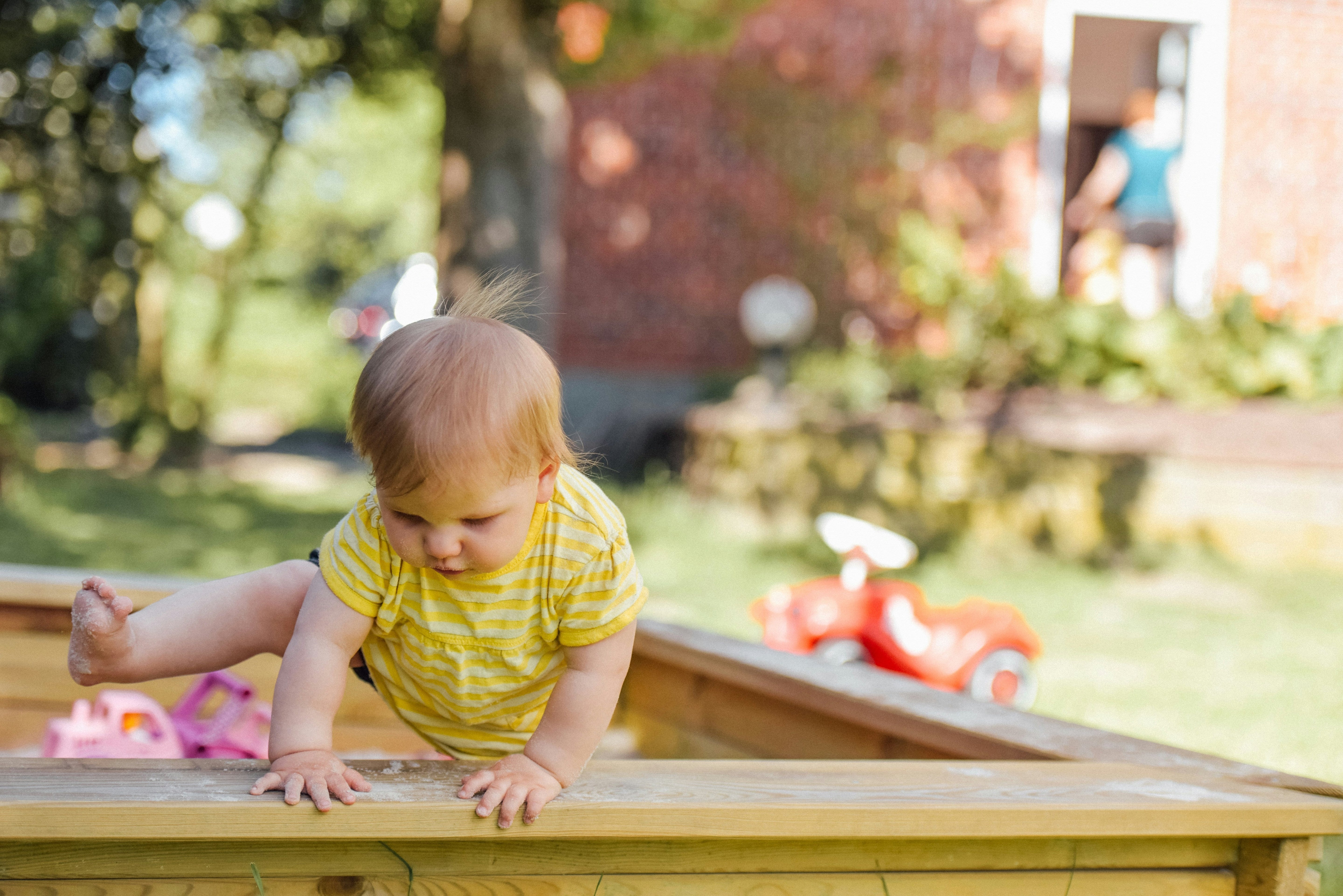
If your baby is under two and you are raising them with two languages, you are probably doing most of this on faith.
You speak. You repeat. You sing the same songs. And your baby looks back at you without saying much of anything, in either language.
It can be hard to know if any of it is landing.
Here is what is actually happening.
Language learning at this age is almost entirely invisible
For the first year or two of life, a baby's relationship with language is almost entirely internal. They are not producing much. They are absorbing everything.
This is true for monolingual babies too, but in a bilingual environment it can feel more acute, because you are splitting your attention across two languages and getting very little back from either.
What your baby is doing during this time is building. They are mapping sounds to meanings, associating words with objects and routines and people, and slowly constructing two separate systems that will eventually allow them to operate in both languages. Every consistent voice they hear, every word repeated in the same context, every sound anchored to a familiar moment is contributing to that map. None of it is wasted, even when none of it is visible.
The absence of output is not evidence that nothing is happening. It is just how this stage works.
What you might notice
There are a few things that can show you the process is underway, if you know what to look for. None of them are dramatic.
A baby who responds to a familiar phrase — the one that means food is coming, or bath time, or sleep — in either language is showing you that comprehension is building in both. It might be a turn of the head, a change in expression, a reaching toward something. Small reactions to known words are the earliest evidence that a language is taking hold.
Before words come, babies experiment with the sounds available to them. A baby exposed to two languages has a larger sound palette to draw from, and you may notice them producing sounds that belong specifically to the minority language — sounds that have no equivalent in the dominant one. This is worth paying attention to. It means the phonetic architecture of the minority language is being internalised, quietly, before a single word has been spoken.
Perhaps the clearest sign of all is a baby who understands something they cannot yet say: who reaches for the right object, looks at the right person, reacts to a question they cannot answer. In a bilingual environment, any evidence of this in the minority language is meaningful, even when it feels small. Comprehension at this stage is the foundation everything else is built on.
What uneven looks like, and why it is normal
At this age, the two languages will almost never feel equal. The dominant language — the one spoken by the wider environment, the one at daycare, the one most people around your child use — will almost always appear stronger. Your baby may respond more readily in one language, or seem more comfortable with one set of sounds.
This is not the minority language failing. It is the minority language doing exactly what you would expect given the difference in exposure. The question is not whether both languages look equal right now. It is whether the minority language has a consistent, warm presence in your baby's life. If it does, it is being absorbed, even when you cannot see it.
The only thing that matters at this stage
You will not get a lot of feedback from a baby under two. That is not a bilingual problem. That is just babies.
What you can control is consistency. The same words in the same moments, day after day. A minority language that shows up at bath time and meals and bedtime and the walk to the park, carried by your voice, by songs, by whatever you reach for to fill the gaps, reliably enough that your baby begins to associate it with the texture of ordinary life.
That is what makes a language stick. Not volume. Not intensity. Just presence, over time.
It will not always feel like it is working. There will be stretches where you wonder if any of it is landing, where the effort feels disproportionate to what you can see. That is normal. The return on this kind of investment is slow and then sudden: a word here, a recognition there, and then one day a child who moves between two languages as naturally as breathing.
You are building something that will matter for the rest of their life. Keep going.
This article is for general educational purposes and does not replace advice from a qualified professional. If you have concerns about your child's development, speak with a paediatrician or a speech and language therapist experienced in bilingual children.
Share: