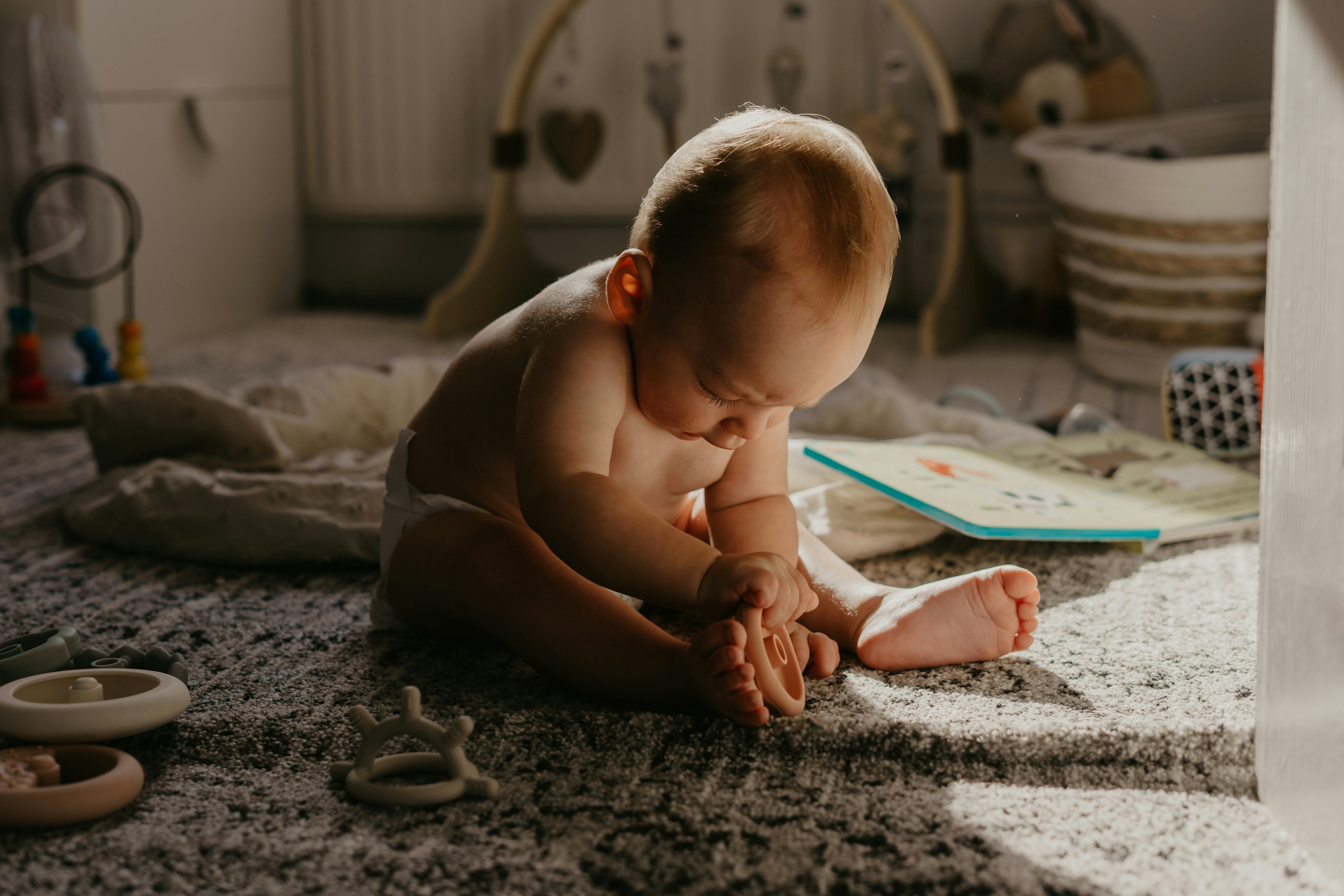
No, learning two languages does not confuse your baby. Babies are not confused by two languages. They are remarkably good at handling them.
If you've been told otherwise, you're not alone. The idea that two languages will overwhelm a baby is a persistent myth in bilingual parenting. It often comes from people who mean well, including family members and sometimes even paediatricians, but who are not familiar with what infant language research shows.
Here is what is really going on.
Babies are built for this
From birth, babies pay close attention to language. They track patterns in sound, rhythm, and pitch. Not words yet, but the building blocks that words are made of.
By around four months, bilingual babies can distinguish between their two languages. They do this by detecting differences in how each one sounds. French sounds different from Korean. English has different rhythms than Arabic. Babies notice.
This is not confusion. It is a sign that two separate systems are forming, quietly and automatically, long before a child says their first word.
Two languages do not compete. Babies organise them
A common assumption is that two languages sit in the same mental space and get tangled. Research shows the opposite. Babies actively organise what they hear.
They start associating languages with contexts. One parent speaks one way. A grandparent sounds different. Certain words come up during bath time, others during meals. These patterns help babies sort input and build distinct systems, not one mixed system.
This happens naturally, without instruction, as long as exposure is consistent.
Why mixing languages is not confusion
As children start to speak, they often mix languages in the same sentence. They may use a word from one language when they cannot find it in the other, or switch depending on who they are talking to.
This is called code-switching. It is completely normal. It is not a sign that the languages are getting confused. It shows that the child is using every resource available to communicate.
Code-switching usually decreases as vocabulary grows in both languages.
What actual confusion would look like
There is an important difference between normal bilingual development and a genuine communication difficulty.
Normal bilingual patterns include:
-
mixing languages
-
understanding more than speaking
-
preferring one language in certain situations
-
having a smaller vocabulary in each language individually
You may want to speak to a professional if you notice:
-
not responding to familiar words in either language
-
difficulty understanding simple instructions in both languages
-
limited communication, verbal or nonverbal, for their age
If you are unsure, a speech and language therapist with experience in bilingual development is the right person to ask. Make sure any assessment covers both languages. Evaluating only one will often make a bilingual child appear behind.
What actually helps
You do not need a perfect system. You need consistent exposure.
Babies learn through repetition
Hearing the same words and phrases across different situations helps patterns become familiar.
They learn through interaction
Back and forth exchanges, even with a baby who can only babble, build strong foundations.
They learn through context
Language tied to real moments, routines, and relationships sticks far better than anything abstract.
Neither language needs to be perfect
A parent who speaks imperfect Korean with warmth and consistency will do far more than one who stays silent out of fear of getting it wrong.
The bottom line
Two languages do not confuse babies. They give them more to work with.
The concern is understandable. It is repeated often enough that it can feel like fact. But the evidence points in the other direction. Early exposure to two languages is an advantage, not a burden.
You are not overwhelming your baby. You are giving them a strong start.
Share: